When you’ve put so much love into creating a simplified, beautiful home, a cat’s natural urge to scratch can feel like it’s working against your design. They aren't trying to be destructive, they’re just claiming their spot in a way that, unfortunately, turns your clean lines, neutral fabrics, and exposed furniture legs into the perfect targets.
If you’re ready to add a new minimalist cat scratcher to your home, the most important question to ask is whether cats prefer vertical or angled scratching surfaces.
The short answer is that most cats prefer vertical surfaces, but it depends on context, placement, and habit. Let’s look at how to choose the right one for your space.
Is There a Reason Why Cats Scratch in the First Place?
Before you can pick the right surface, it’s helpful to see why your cat is scratching in the first place. It’s actually their way of communicating and keeping their body moving. Once you understand that, the goal is no longer about stopping the habit, but simply redirecting it to a better spot.
The 6 most common reasons your cat scratches:
- Asking for a little bit of attention
- Stretch their spine and shoulder muscles
- Remove old outer claw layers
- Waking up after a long nap
- Mark territory (visual marks + scent glands in paws)
- Release energy and stress
Most Cats Prefer Vertical Scratching Surfaces
Most cats love to scratch vertically, which is why your sofa is such a target. Examples include:
- Sofa arms
- Chair backs
- Wall corners
-
Wooden table legs
Why? Vertical scratching allows a full-body stretch. Your cat can extend upward, dig in, and pull down with force, especially since that deep, powerful motion is so satisfying.
Vertical furniture edges often become the main scratching zone, where the clean shape makes them easy to grip. If your cat already scratches upright furniture, they likely prefer vertical posts.
Angled Scratching Surfaces Are a Great Alternative
Angled scratchers offer a middle ground between horizontal and vertical surfaces, usually leaning at a 30 to 60-degree angle.
3 reasons some cats prefer angled scratching surfaces:
- They feel stable and grounded
- They allow strong pulling without full extension
-
They mimic tree trunks at a natural tilt
Angled surfaces work especially well for:
- Senior cats
- Heavier cats
- Cats who scratch the lower areas of furniture
If your cat scratches the lower half of your sofa or the edges of your rug, an angled scratcher may work better than a tall post.
What Cat Behavior Tells Us About Their Preferences
While there is no universal rule, behavior experts consistently observe these four patterns:
- Most healthy adult cats prefer vertical scratching
- Cats adjust based on what is available
- Placement matters more than angle
-
Older or stiffer cats often shift to angled or horizontal surfaces
In other words, your cat chooses convenience over theory. If the only cat scratcher sits hidden in a corner, your cat will choose the sofa, even if the angle is wrong.
How Can You Test Your Cat’s Real Preference?
Don't guess! Test both and see which one your cat picks naturally.
Place:
- One vertical cat scratcher near the current damage area.
-
One angled scratcher in the same room.
Watch for 7–10 days.
Look for:
- Which one gets used first
- Which one gets used daily
- Where your cat stretches the most
Angled vs. Vertical Cat Scratchers
A vertical scratching surface is best if your cat:
- Scratches sofa arms
- Stretches upward fully
-
Targets door frames or walls
An angled cat scratcher is best if your cat:
- Scratches lower furniture areas
- Avoids tall posts
- Seems hesitant to stretch fully
Your Top Cat Scratching Questions Answered
Q. Do cats need vertical scratchers?
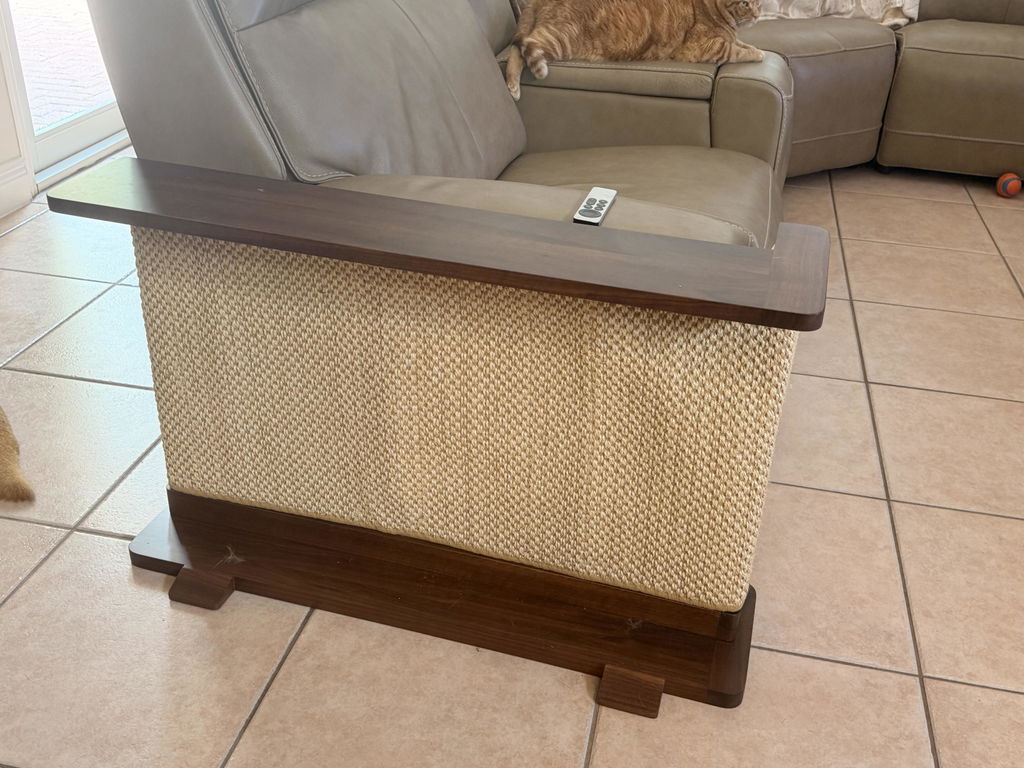
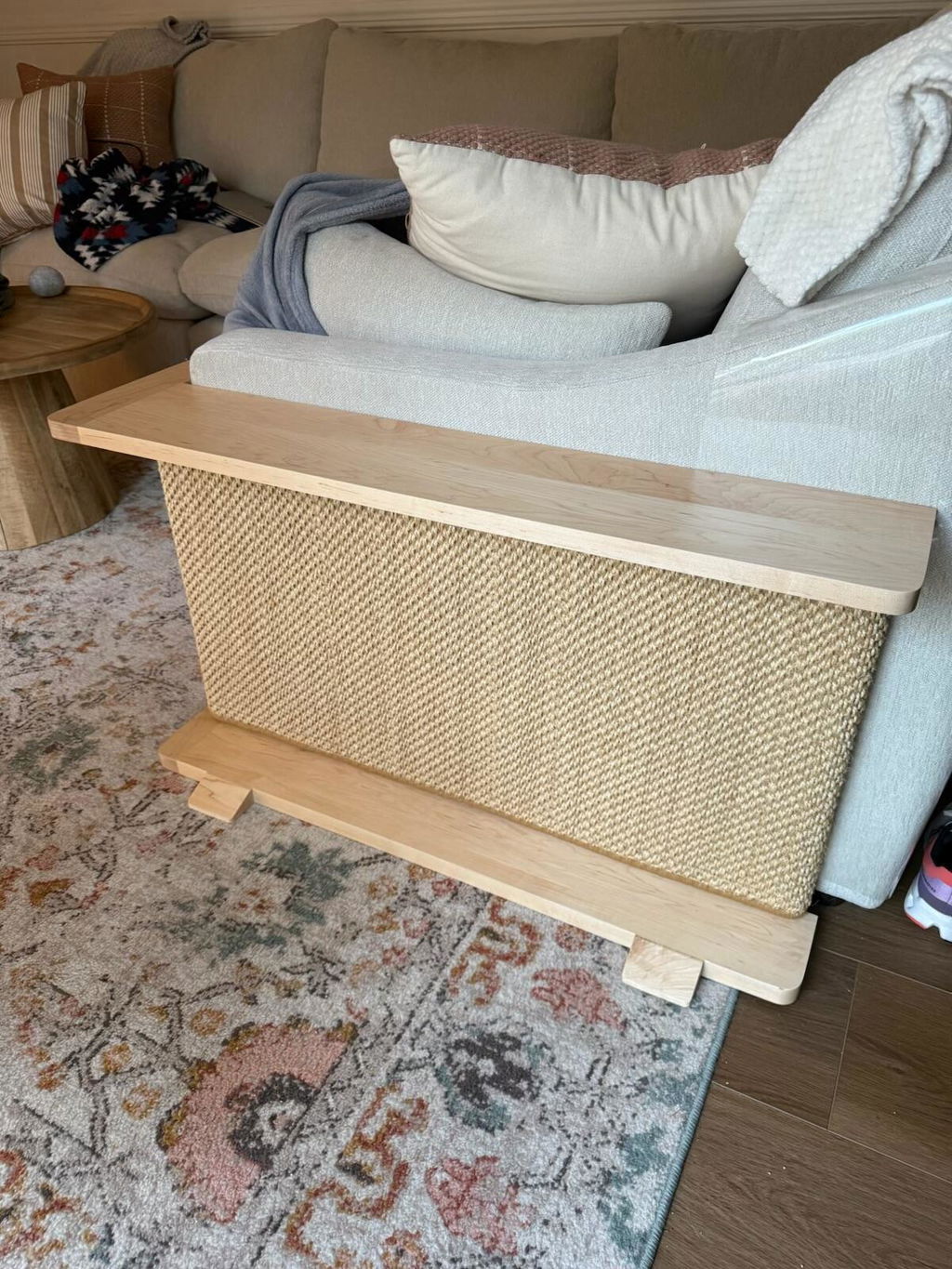
A. Almost every cat must have at least one vertical scratching surface like the Cat-e-Corner, as it’s the only way for them to stretch their muscles and mark their home naturally fully.
Q. Are angled scratchers bad?
A. No. Angled scratchers can be excellent, especially for senior cats or cats that prefer grounded movement.
Q. Why does my cat ignore the scratching post?
A. Usually because of placement. Move the scratcher right next to the damaged furniture, as cats are much more likely to scratch where they’re already feeling motivated.
Q. Should I remove the old, damaged furniture area?
A. Do not remove it immediately. First, place the scratcher beside it. Once the new habit forms, you can gradually reduce access.
Q. Can one scratcher be enough?
A. In small, minimalist homes, the Cat-e-Corner is the best choice for a single scratcher, as it’s designed to fit seamlessly into any corner, while multi-cat homes will likely still need a few extra sisal mats and options.